As you may have seen recently in the Vancouver Sun, multiplexes have become a lightning rod of controversy, with strong feelings on all sides. Communities are being affected positively with the gift of choice, but also negatively with boxy, unfriendly construction. These multiplexes are a part of the “Missing Middle”, a gentle-density movement intended to provide housing options that fall between a single-family house and a condo tower.
For many years housing redevelopment in the lower mainland has almost exclusively focused on large complexes with hundreds of tiny units to maximize on profit. This has left our city with a lack of medium sized housing options for people who live and work across Metro Vancouver. To address this need, the province of British Columbia recently passed a law that blanket rezoned all municipalities across the province to allow for multiplexes on single lots. The market is currently wrestling with this transition, and it is showing up in interesting ways.
No doubt, many people agree there is a need for increased gentle density and variety of housing stock with the goal of increasing affordability through greater choice. At the same time, others are concerned about the potential changes to the character of our city from boxy and imposing oversized buildings (aka monstrosities).
The key, in our opinion, is to inject design professionals early into these projects and not let profit alone dictate what gets built. Good design pays off in multitudes, especially when it comes to converting a single-family home lot into a multiplex. Novell meets the need for Vancouver's missing middle with the same client-centric mission as all our projects: “Thoughtful solutions and meaningful spaces”. When it comes to multiplex development this translates into thoughtful planning that respects the needs of the homeowners yet preserves the streetscape, bringing meaningful improvement for both the owners and the neighbourhood.
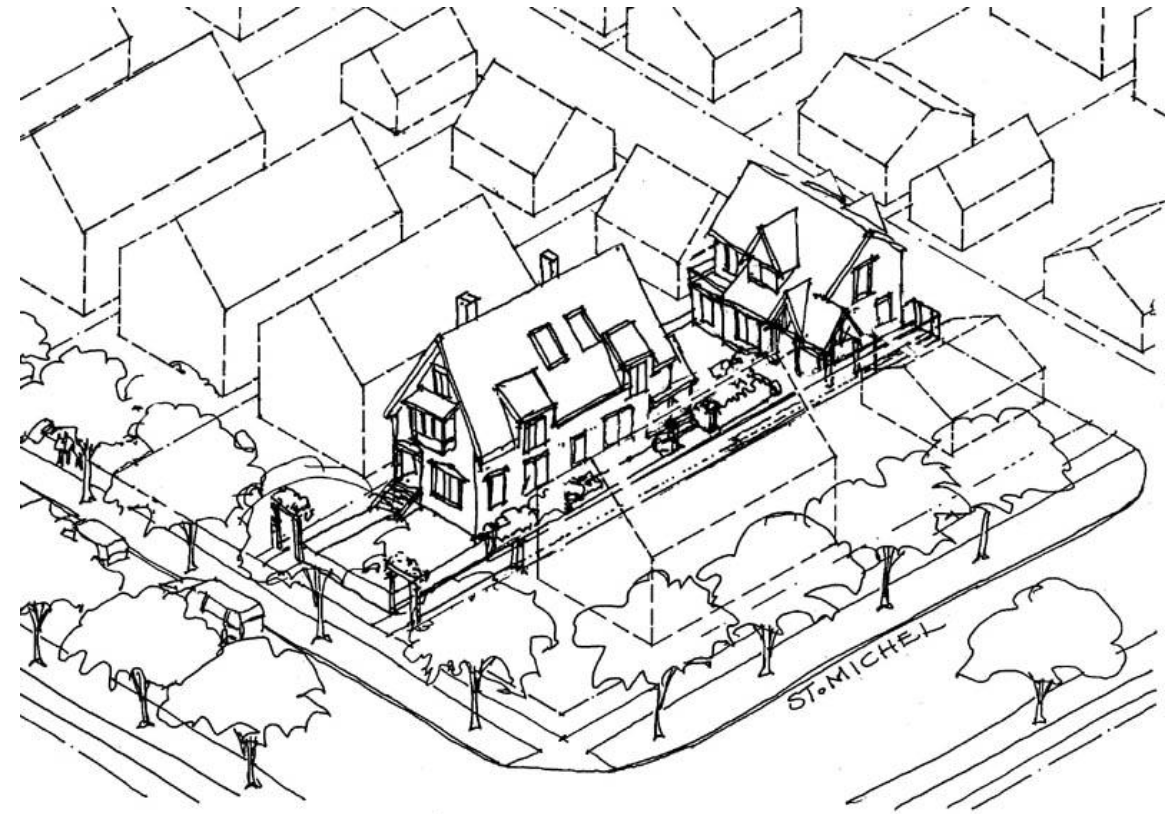
For multiplex development it starts with these three design fundamentals:
(1) design for your streetscape
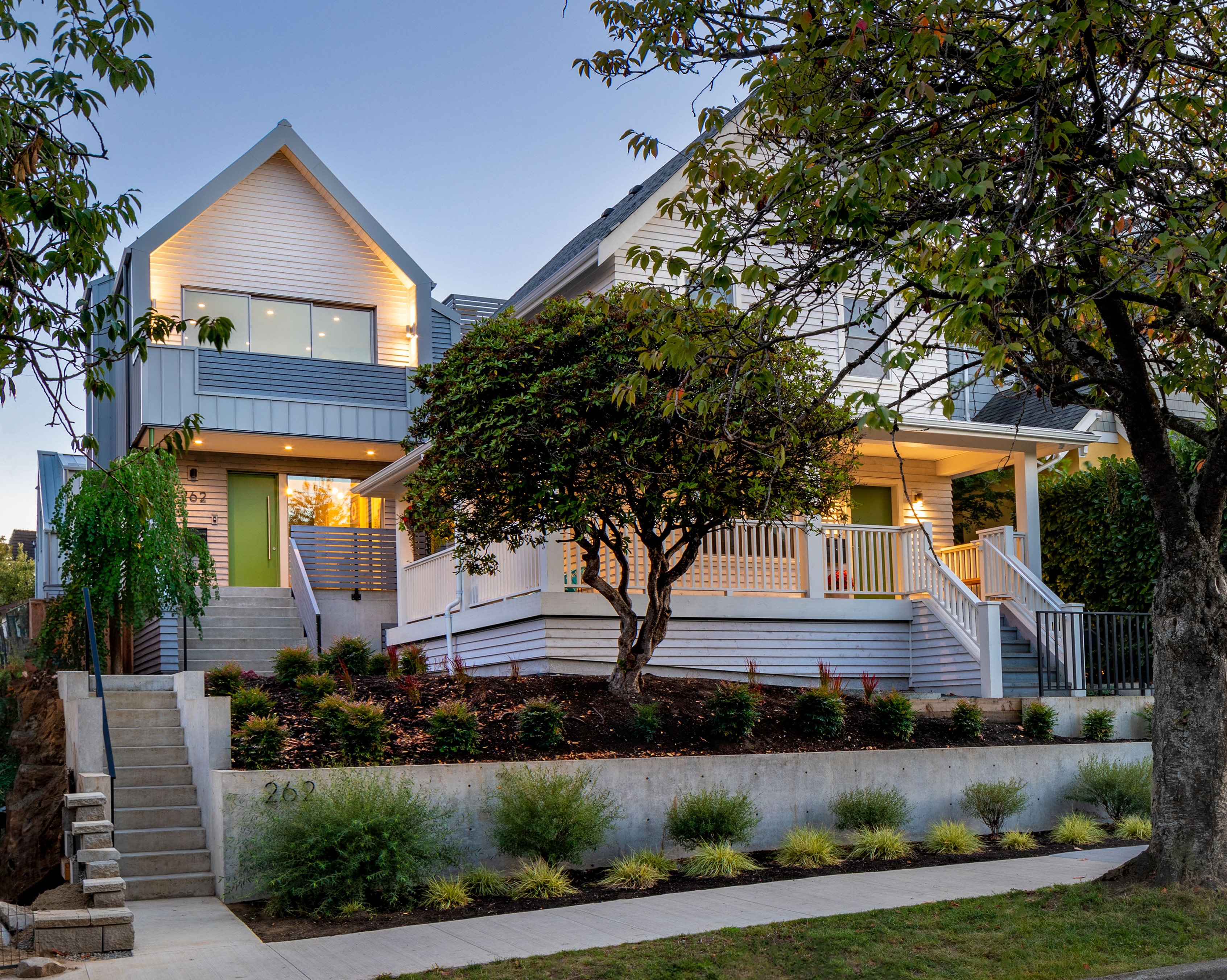
Living with gentle density and avoiding a monstrosity involves considering the architecture and streetscape carefully, the massing and expression of the homes’ exterior in context with the street.
How privacy, outlook and one’s relationship to their neighbours is paramount. Pitched roofs help mitigate shadow casting. Flat roofs feel nice when they can be terraced, and offer more usable head room within. A design professional will understand and be able to parse through the balance of historical context, architectural styling, current construction assemblies, and the local market of materials and products available to execute.
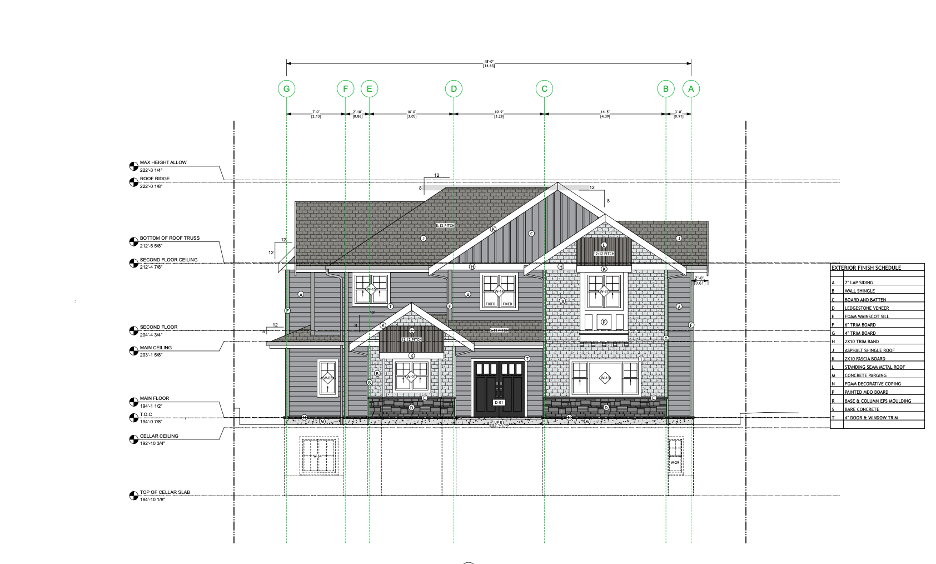
The scale of the building, its shape or form, the elements of the building’s façade (windows, doors, stairs, porches) and the detailing chosen all contribute to the streetscape visual. Regardless of the maximum heights, widths and sizes, it is a designer’s role to study the streetscape context, evaluate the window patterns, components and architectural styling that is already defining the area, then make smart decisions. Certainly, a multiplex will have a larger footprint than a single-family home, though there are ways shape the form, lead the eye, and diminish that bulky feeling.
(2) provide a beautiful path to a beautiful place
Every home deserves a beautiful path to a beautiful place. This is possible with considerate thoughtful design, regardless the size of home within. Think about what you want to put your eyes on as you arrive home, a row of fragrant jasmine, a stunning light fixture, an attractive door with a pop of colour, or welcoming chairs under a covered porch. Chances are that your neighbour will also appreciate a building that feels like a nice place to be.
When you arrive home, or as guests approach your door, there is a psychological shift that happens. You are approaching a threshold to a new place, and providing a path which offers that moment to see something beautiful, and experience a bit of decompression feels good.
(3) separate private and public space
We all want some semi-private outdoor space to enjoy without feeling over-exposed or buried in the dark. Thoughtful design considers the need to have outlook, step outside, feel the grass, dine al fresco, or have coffee on our porch in peace. Overlook onto neighbours should be avoided, and sightlines between spaces respected. When this is taken care of, buildings immediately also seem to become more beautiful as well because the spaces, elements and landscaping is layered, and lines are blurred between outside and inside.
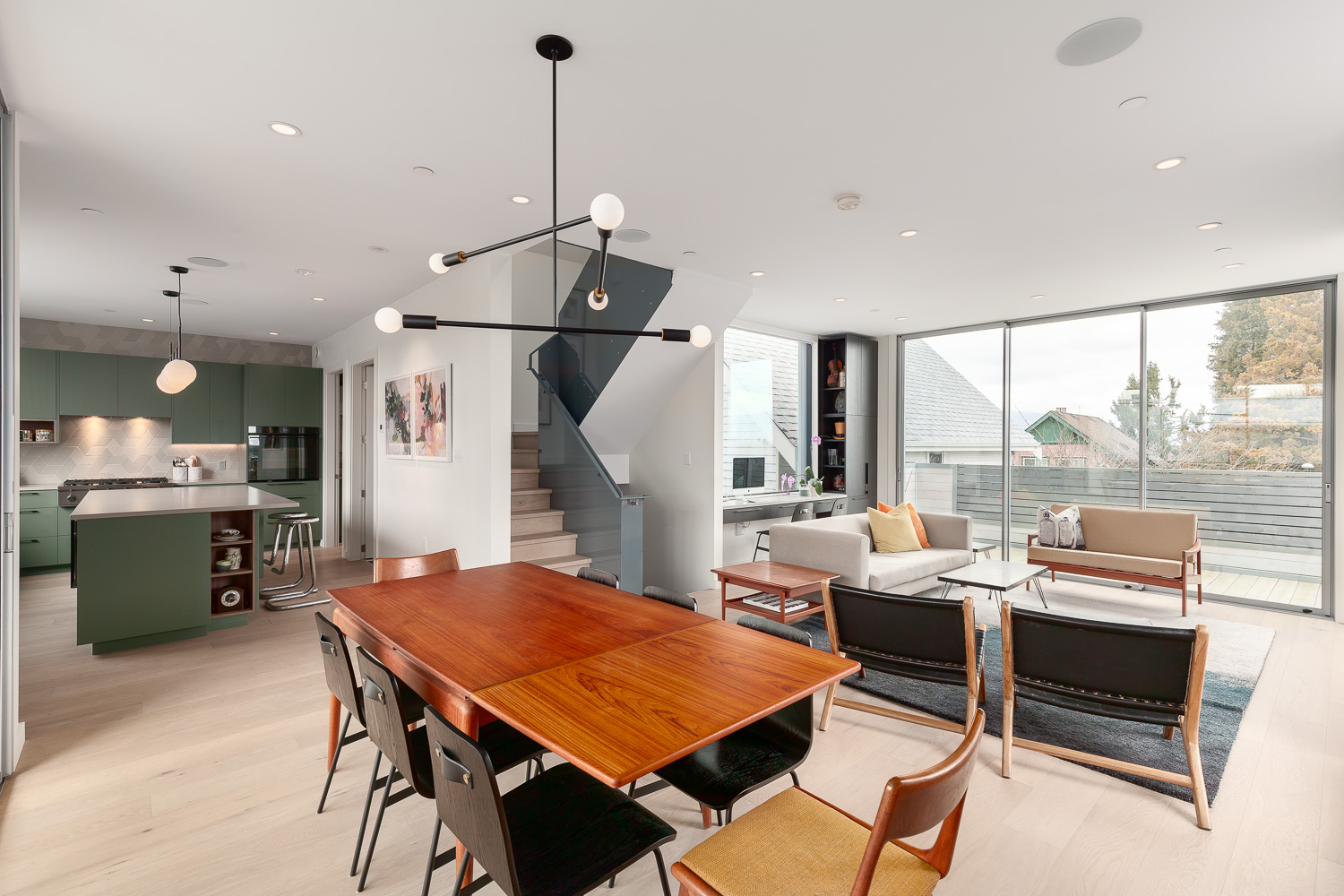
Once inside, and regardless the size, our creature comforts need to firstly be taken care of, which starts is the separation of public, semi-private, and private spaces. There’s no point in having a friendly exterior expression if the interior doesn’t work for modern living. We all need to gather, enjoy outlook to a distance, but also appreciate retreat. Smaller homes often collapse the wasted space of hallways, though doing so without careful attention of sightlines, noises, smells can frustrate in other ways.
Why Does Novell Want To Build For The Missing Middle?
Three simple reasons:
• Our children need more affordable, but livable options for housing, and we believe this is an effective way to move that needle.
• We enjoy the challenge of custom designing thoughtful, meaningful spaces appropriate for the community around us.
• Building 4 homes on one lot, versus 4 homes on 4 lots makes good business sense for everyone. We can provide an economy of scale that is more cost effective than single family custom house building.
If developers only build homes for maximum profit at the expense of people, these "multiplex monstrosities" will only proliferate. Inject thoughtful design excellence and beyond a healthy proforma, there becomes multiple winning bottom lines.
We want to work with you to make the most for your family without destroying the charm and character of Vancouver. Our team looks forward to crafting a beautiful city where everyone has a place to live, work and raise their children.
Please contact us here if you’d like to find out more, or have a multiplex project to discuss.